
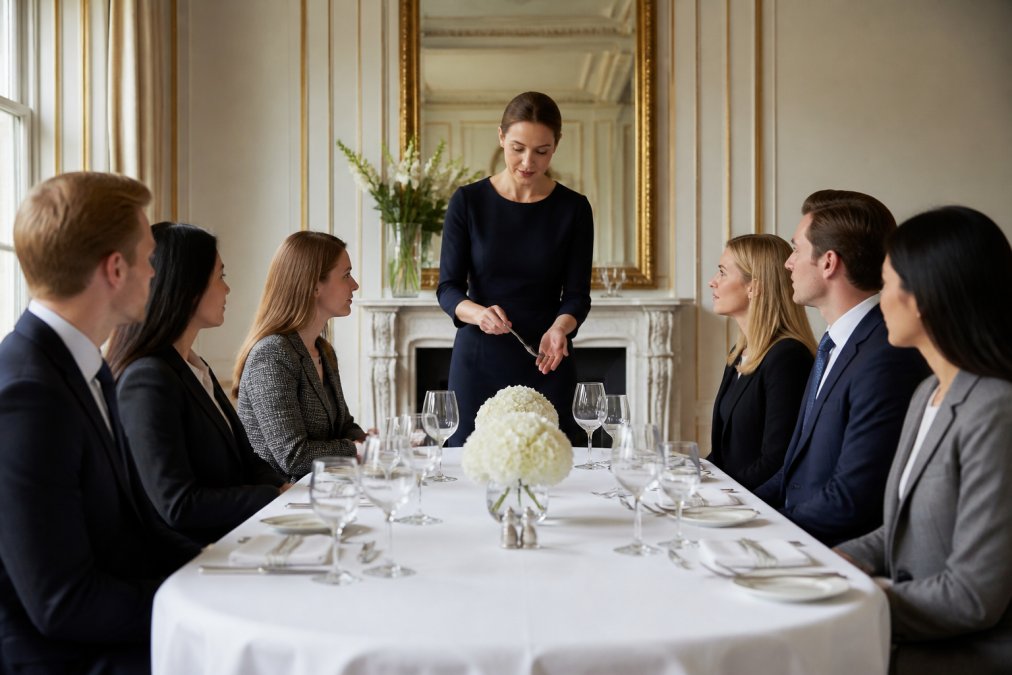
Table of Contents
- Quick Comparison: Top Etiquette Training Providers
- How We Evaluated the Best Etiquette Training in London
- 1. Kensington House Academy: Best for Hybrid Learning and Refined Living
- 2. Laura Windsor Etiquette Academy: Best for Personalised Coaching Across Age Groups
- 3. International Etiquette & Protocol Academy of London: Best for International Business Etiquette Standards
- 4. Emma Dupont School of Etiquette: Best for Boutique Social Polish
- 5. More Than Good Manners: Best for Beginners Seeking an Accessible Entry Point
- Professional Business Etiquette Courses: What Corporate Clients Should Expect
- Frequently Asked Questions
Last Updated: September 10, 2026
Quick Comparison: Top Etiquette Training Providers
Finding the best etiquette training in London means weighing curriculum depth, delivery format, and how well a course fits your goals. This guide from Kensington House Academy compares five providers across the criteria that matter most: teaching quality, flexibility, and practical outcomes. Whether you need professional business etiquette courses for a client-facing role or a refined social polish programme, the table below gives you a fast starting point.
| Provider | Best For | Format | Standout Strength |
|---|---|---|---|
| Kensington House Academy | Hybrid learning and refined living | On-site and online | Expert teachers, free membership |
| Laura Windsor Etiquette Academy | Personalised coaching across ages | In-person | Age-specific programmes |
| International Etiquette & Protocol Academy | International business standards | In-person | Diplomacy and protocol focus |
| Emma Dupont School of Etiquette | Boutique social polish | In-person | One-day intensives |
| More Than Good Manners | Beginners | In-person | Accessible entry point |
The best etiquette training in London is the course that matches your specific goal, whether that is executive presence, dining etiquette, or international protocol.
How We Evaluated the Best Etiquette Training in London
We assessed each provider on curriculum substance, teaching experience, delivery flexibility, and how directly the training translates into real-world confidence. A course that only teaches which fork to use misses the point; modern manners training should build social intelligence, professional conduct, and self-awareness that hold up in a boardroom or a formal dinner.
Our evaluation weighted four factors:
- Curriculum depth: Does the programme cover business decorum, dining, and cross-cultural communication, or only surface-level rules?
- Delivery options: Are online courses available for those who cannot attend in person, and is the online version genuinely equivalent to the in-person experience?
- Teaching credentials: Who delivers the training, and do they have genuine experience?
- Post-course value: What support exists after the final session?
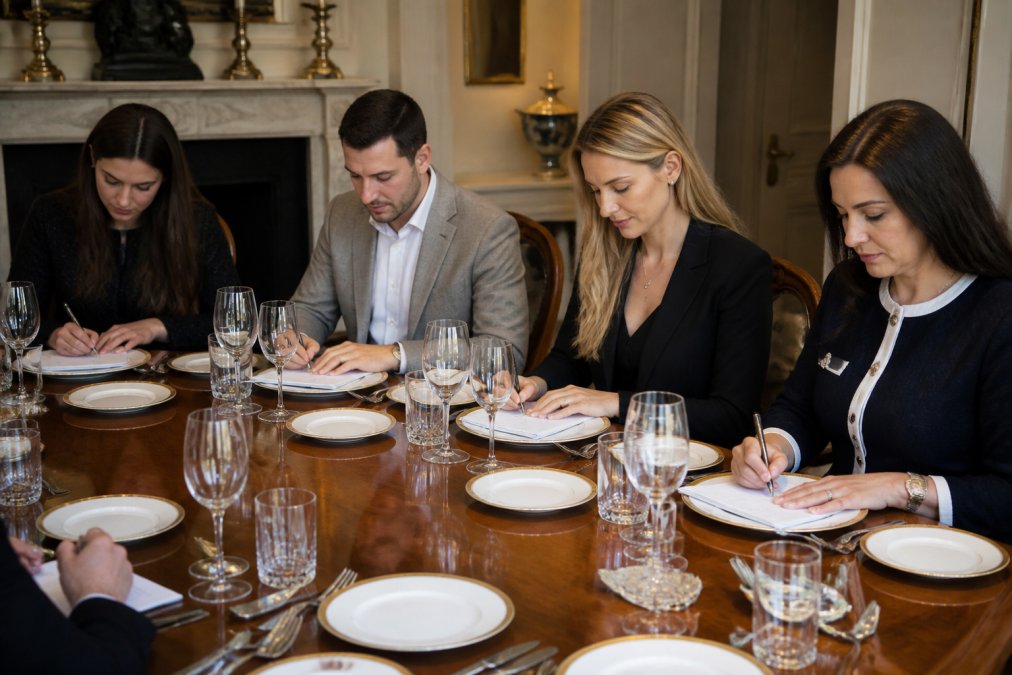
The two factors most buyers overlook
Most guides stop at the four criteria above. In practice, two further questions separate a course that sticks from one that fades within a fortnight.
1. How is the learning actually delivered? Interactive learning styles, where you practise rather than just listen, tend to produce the strongest results. The specific mechanisms to ask about are:
- Role-play: Simulated introductions, networking scenarios and difficult conversations, with live feedback.
- Real-world dining simulations: A full table setting, courses served in sequence, and correction in the moment rather than from a slide.
- Video analysis: Recorded practice with playback, which is the fastest way to surface unconscious habits such as posture, handshake pressure or filler language.
- Peer observation: Watching others make the same mistakes is often more instructive than being corrected yourself.
A provider that cannot describe its methodology in these terms is likely teaching etiquette as information rather than as behaviour.
2. What happens after the course ends? This is the biggest gap in the market. Almost no provider advertises its post-course support clearly, yet it is what determines whether the training holds. Ask specifically about:
- Alumni networks: Ongoing groups, events or readers’ gatherings that keep learners connected.
- Refresher resources: eBooks, downloadable checklists or short follow-up modules.
- Mentorship or check-ins: Periodic contact with the trainer, even if only by email.
- Certification pathways: Whether the course counts towards a further qualification such as a Train the Trainer credential.
A common mistake is choosing a course by price alone. The real difference between providers comes down to how much individual attention you receive, whether the teaching style suits how you actually learn, and what remains available to you once the invoice is settled. Interactive learning styles, where you practise rather than just listen, tend to produce the strongest results. The UK government’s guidance on professional skills development underlines how transferable interpersonal skills support career progression, which is exactly what good etiquette training delivers.
Before booking, ask two questions: “Can I see a sample of the role-play or dining simulation?” and “What do I get access to after the course?” The answers will tell you more than any brochure.
1. Kensington House Academy: Best for Hybrid Learning and Refined Living
Kensington House Academy is our top pick because it combines specialist etiquette teaching with a genuinely flexible learning model. Trainings run both online and face-to-face under the name Kensington School of Etiquette and Manners, so you are not forced to choose between convenience and depth. The academy focuses squarely on confidence, sophistication, and a commanding presence in business and social settings.
What sets it apart is the breadth of its offering. Beyond social and business etiquette, it provides communication skills and refinement programmes, plus a popular Train the Trainer course for those who want to become a certified international etiquette consultant. The academy also publishes eBooks and paperbacks on self-development, refinement, and elegant living, and offers a free membership with exclusive tips, eBooks, and readers’ gatherings.
Young professionals in client-facing roles, graduates building workplace wisdom, and anyone seeking a refined, sophisticated lifestyle through a hybrid of online and in-person learning.
The one honest limitation: because the academy covers so much ground, you need to choose your course carefully to match your goal. Pricing depends on the specific programme and delivery format, so check the website for current details.
2. Laura Windsor Etiquette Academy: Best for Personalised Coaching Across Age Groups
Laura Windsor Etiquette Academy suits individuals who want tailored attention. The personalised coaching approach means sessions adapt to the learner rather than following a fixed script.
Where it falls short: public pricing is limited, so you will need to make contact for a quote.
3. International Etiquette & Protocol Academy of London: Best for International Business Etiquette Standards
For anyone working across borders, this academy delivers structured training in international business etiquette, protocol, and diplomacy. Its modules cover diplomatic etiquette and cross-cultural communication.
The niche focus is both its strength and its limitation. If you need general social graces rather than international protocol, a broader provider will serve you better.
4. Emma Dupont School of Etiquette: Best for Boutique Social Polish
Emma Dupont School of Etiquette offers refined social etiquette in an intimate, boutique setting. Its one-day social etiquette intensives appeal to those who want focused, polished instruction without a long commitment. The small-group environment means more individual feedback.
5. More Than Good Manners: Best for Beginners Seeking an Accessible Entry Point
Beginners get a clear, uncomplicated start here. More Than Good Manners runs introductory one-day manners courses and provides comprehensive programme downloads. The structured curriculum suits anyone testing the waters before committing to a longer programme.
The main drawback is that full pricing transparency requires downloading documents.
Professional Business Etiquette Courses: What Corporate Clients Should Expect
Corporate etiquette training is where the return on investment becomes measurable, and it is the angle most provider websites in this space ignore entirely. A well-designed professional business etiquette course covers formal introductions, networking etiquette, business hospitality, and client relationship management, all of which feed directly into stronger commercial relationships. The difference between a course that pays for itself and one that does not usually comes down to how tightly the curriculum is tied to your commercial reality.
Where the return actually shows up
The value of corporate etiquette training can land in four places, and it is worth naming them before you brief a provider:
- Client retention: Consistent, polished conduct at meetings, dinners and site visits reduces the small frictions that erode trust over a long relationship.
- Negotiation outcomes: Reading a room, holding silence, and handling introductions and toasts correctly all shape how a counterpart reads your confidence.
- Referral and networking yield: Teams that can work a room and follow up with the right courtesies convert more introductions into conversations.
- Onboarding speed: New joiners who already understand client-facing conduct need less shadowing time before they are put in front of a customer.
What a serious corporate programme should include
When evaluating corporate training, look for these elements:
- Bespoke curriculum: The content should reflect your industry and the specific situations your team faces, a private equity team and a hospitality team need different scenarios.
- Interactive delivery: Role-play, dining practice, and live feedback beat passive lectures. Ask specifically whether the provider runs real-world dining simulations and video analysis, because that is where behaviour actually changes.
- Accredited certification: Where relevant, certification signals a recognised standard and gives attendees something concrete to show for their time.
- Post-course support: Alumni networks, refresher resources and periodic check-ins extend the value well beyond the training day. This is the single most under-asked question in procurement.
Budget versus luxury tiers
Corporate etiquette training broadly splits into three tiers, and knowing which you are buying avoids both overpaying and under-delivering:
- Entry tier: One-day group workshops, typically delivered in-house or at a shared venue. Good for awareness-raising across a large cohort.
- Mid tier: Multi-module programmes with bespoke scenarios, some one-to-one coaching, and follow-up materials. The most common choice for client-facing teams.
- Luxury tier: Fully bespoke programmes with senior consultants, fine-dining venues, and ongoing mentorship. Reserved for executives and high-stakes client relationships.
Duration and cost vary widely. Introductory sessions may run for a single day, while comprehensive corporate programmes span multiple modules across several weeks. Always ask for a per-head figure and a breakdown of what is included, because headline day rates rarely tell the full story.
ACAS guidance on workplace relationships and conduct is a useful reference for how professional conduct underpins a healthy workplace, and etiquette training reinforces those same standards. The Chartered Management Institute’s research on management skills consistently highlights soft skills training as a priority for developing executive presence.
For corporate buyers, the strongest signal of a good provider is not the syllabus, it is what happens after the final session. Ask about alumni networks, refresher sessions and measurable follow-up before you sign.
Frequently Asked Questions
What should I look for when choosing an etiquette training provider?
Check the curriculum covers the skills you actually need, whether that is dining and table manners, formal introductions or international protocol. Look at class size, because smaller groups give more personal feedback. Confirm whether tutors have accredited certification or a train the trainer background. Ask about post-course support, since alumni networks and follow-up materials help you keep the habits you learn. Finally, match the format to your schedule: in-person sessions suit people who want live practice, while online courses work better for remote learners.
How long does a professional etiquette training course typically last?
Duration varies by provider and format. Some schools run one-day social etiquette intensives, while business etiquette programmes often span several weeks with weekly sessions. Train the trainer certification courses tend to run longer because they cover teaching method as well as content. When you compare etiquette training duration and cost, remember that a longer course is not automatically better; what matters is whether the schedule fits around your work and whether each session builds on the last.
Can etiquette training help with international business protocol?
Yes. Programmes focused on international business etiquette standards cover cross-cultural communication, formal introductions, gift-giving customs and dining etiquette across different markets. This matters for professionals who host overseas clients or travel for meetings, because a misread greeting or the wrong seating arrangement can undermine a deal. Courses that include diplomacy and protocol modules are the strongest fit if your role involves international client relationship management or business hospitality.
Do etiquette schools offer private one-on-one coaching?
Many do. Private coaching suits people who feel anxious in social situations or who want to work on a specific weakness, such as executive presence or non-verbal communication, without an audience. It also allows a bespoke curriculum built around your industry and goals. Group courses, by contrast, give you the chance to practise with others and observe how different people handle the same scenario. Some providers offer both, so you can start with a group course and add private sessions later.
What is the difference between social etiquette and business protocol training?
Social etiquette focuses on everyday graces: table manners, conversation, hosting and modern manners for personal settings. Business protocol training covers professional conduct, business decorum, formal introductions, networking etiquette and client relationship management. The two overlap, particularly around dining etiquette and body language, but the outcomes differ. If your goal is confidence in formal social settings, start with social etiquette. If you are moving into a leadership role or client-facing work, prioritise professional business etiquette courses that include soft skills training.
The challenge most professionals face is not learning the rules but applying them with genuine confidence under pressure. Kensington House Academy addresses exactly that, pairing experienced etiquette teachers with a hybrid model of on-site and online courses, a free membership with exclusive resources, and a Train the Trainer pathway for those who want to teach others. Get started with Kensington House Academy and build the presence, polish, and self-assurance that carry you through any room.